GujiaCraft03
At the wheel, and before it.
Sterling silver is 925 parts silver in a thousand. The rest is usually copper. That is the metal Gujia works in.
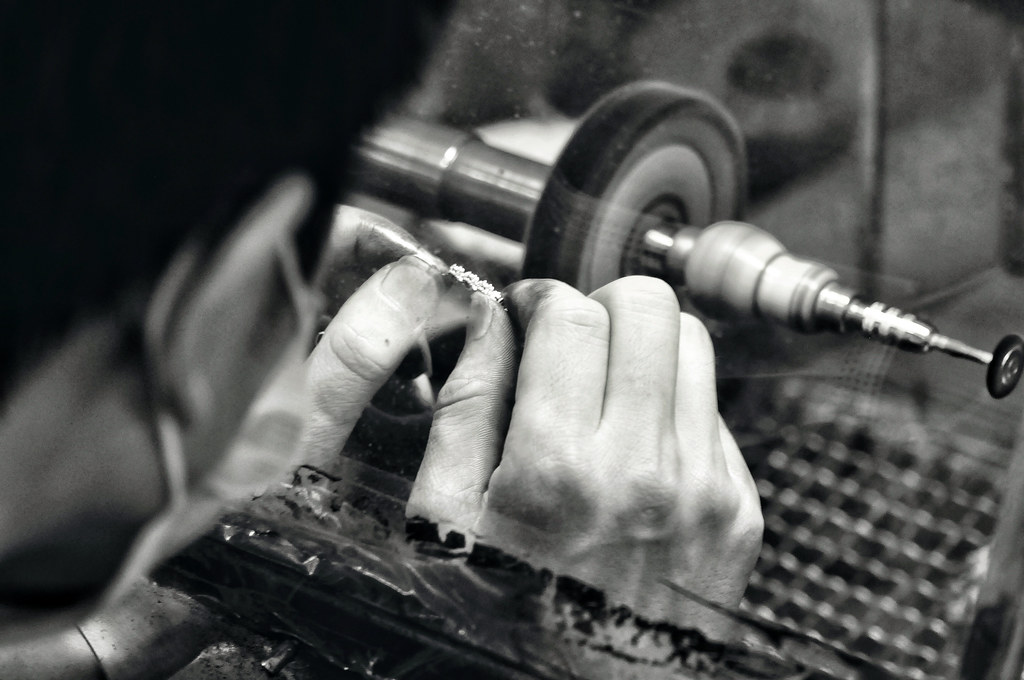
It is bright when it is polished, and it darkens in air, especially where a hand does not rub it. A dark finish can be left in the low parts of a surface on purpose. A bright finish can be brought back at the wheel. Neither state is permanent on a piece that is worn.
The photograph shows that last moment: a small piece of metal at a polishing wheel, through the shield. The hands belong to the photograph. Tool Dude8mm made the picture and released it under CC BY 2.0.
Before the wheel
Wire, rod, coil.
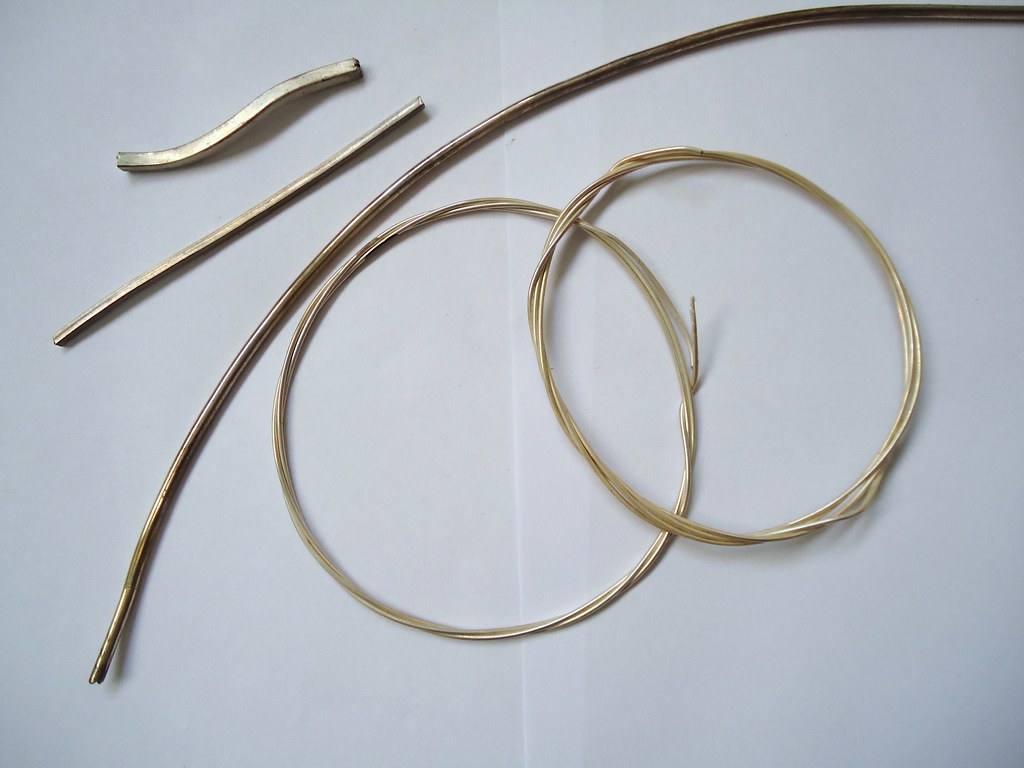
Before any of that, the metal is stock. The still life is by MAURO CATEB: silver wire at 950 and 900 fine. That is not sterling, and it is not a Gujia piece. It is here so the material is visible — straight lengths, a short curve, and fine coils that have not been made into anything.
Hand work, here, means the piece is formed, joined, and finished by a person rather than picked from a numbered list. If you need a method named, put it in the email. If the studio cannot do it, the reply will say so.
- Sterling
- 925 parts silver in a thousand, usually with copper making up the rest. The alloy this studio works in.
- Tarnish
- The dark skin silver grows in air. It can be polished off. It can also be kept, especially down in a recess.
- Bright
- A polished surface. On a hand, a sleeve, or a desk, it will not stay unmarked. That is the metal, not a fault in the finish.
- Wire
- Starting stock. The color photograph shows 950 and 900 fine wire. Gujia’s sterling is a different alloy, at 925.